T
- MERN Stack
In the current system, customers struggle to find information and book tickets efficiently, leading to wasted time and potential misinformation. The ‘MyGuide’ system aims to provide comprehensive details about places, hotels, transportation, and restaurants, aiding tourists in making informed choices. By offering a geographic-based information system, users can easily access relevant details and make travel arrangements with ease.
- Efficient Travel Planning
- Geographic-based Services
- Travel Information System

F
- MERN Stack
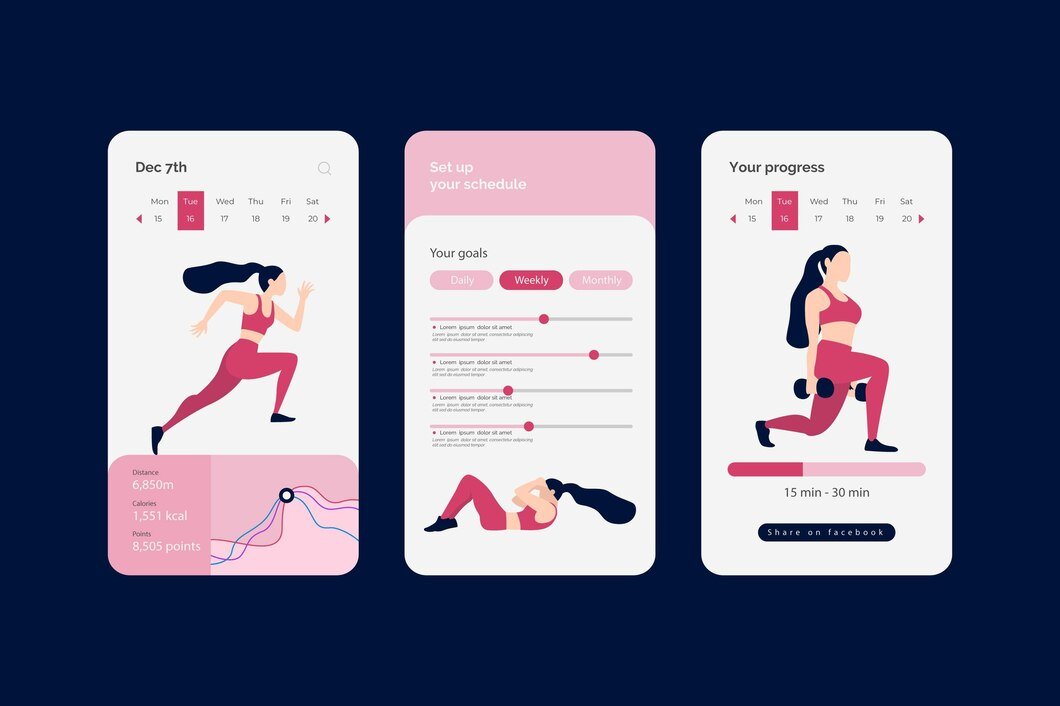
Structured exercise enhances physical and mental well-being. However, various groups, like older adults and postpartum women, face barriers. We explore technology’s role in home-based training, motivating an active lifestyle, and delivering effective results, with a focus on older adults. The application offers workout videos, yoga, meditation, and progress tracking. Users can consult with healthcare professionals. Additionally, they can locate and join nearby gyms via login.
- Elderly Fitness and Healthcare
- Physical and Mental Well-being
- Technology in Home-Based Training
S
- MERN Stack
Smart Journalist is a SaaS-based project designed to empower journalists with tools for recording interviews, capturing live events, and sharing multimedia content. It is especially valuable in breaking news scenarios, where journalists may work irregular hours and travel to cover stories, including potentially hazardous situations. This platform allows Media Admins to safely register, select subscription plans, and manage journalist profiles, each uniquely identified by a QR code. Journalists can create and submit posts with various media content, subject to Media Admin approval, before being shared on a dedicated user page. This system also facilitates communication in emergency situations, enabling journalists to report incidents to Media Admins for efficient management.
- Media Management
- SaaS-based Application
- Smart Journalism

Deep Learning-based chest Computed Tomography (CT) analysis has been proven to be effective and efficient for COVID-19 diagnosis. Existing deep learning approaches heavily rely on large labelled data sets, which are difficult to acquire in this pandemic situation. Therefore, weakly-supervised approaches are in demand. In this project, an end-to-end weakly-supervised COVID-19 detection approach, ResNext+, that only requires volume level data labels and can provide slice level prediction. The proposed approach incorporates a lung segmentation mask as well as spatial and channel attention to extract spatial features. Besides, Long Short Term Memory (LSTM) is utilized to acquire the axial dependency of the slices. Moreover, a slice attention module is applied before the final fully connected layer to generate the slice level prediction without additional supervision. An ablation study is conducted to show the efficiency of the attention blocks and the segmentation mask block. Experimental results, obtained from publicly available datasets, show a precision of 81.9% and F1 score of 81.4%. It is worth noticing that applying image enhancement approaches improve the performance of the proposed method.
- COVID-19 Diagnosis with ResNext+ Model
- Deep Learning in Chest CT Analysis
- Weakly-Supervised COVID-19 Detection

S
A graphical password system with a supportive sound signature to increase the remembrance of the password is discussed. In this system a password consists of sequence of some images in which user can select one click-point per image. In addition user is asked to select a sound signature corresponding to each click point this sound signature will be used to help the user in recalling the click point on an image. Users preferred CCP to Pass Points, saying that selecting and remembering only one point per image was easier and sound signature helps considerably in recalling the click points.
- Cued Click Points (CCP)
- Graphical Password System
- Sound Signature for Password Remembrance

R
A new method is proposed for the region of interest (ROI) extraction using fingertips and finger valley key points. Some new features and a new classifier are proposed based on information set theory. Information set stems from a fuzzy set representing the uncertainty in its attribute / information source values using the information-theoretic entropy function. The new feature types include vein effective information (VEI), vein energy feature (VEF), vein sigmoid feature (VSF), Shannon transform feature(STF) and composite transform Feature (CTF). A classifier called the improved Han man classifier (IHC) is formulated from training and test feature vectors using Frank t-norm and the entropy function. The performance and robustness are evaluated on GPDS and BOSPHORUS palm dorsal vein database under both the constrained and unconstrained conditions.
- Fingertip and Finger Valley ROI Extraction
- Improved Han Man Classifier (IHC)
- Information Set Theory Features

R
- Dotnet
Data hiding conceals data within cover media, linking two datasets: embedded data and cover media data. In covert comms, hidden data is often irrelevant, while in authentication, it’s closely related. Invisibility is key. Sometimes, data hiding causes irreversible distortion in cover media. In remote sensing and high-energy particle experiments, reversible, lossless, and distortion-free techniques are vital. Reversible data hiding allows message embedding in distortion-free media, like military or medical images, ensuring perfect content restoration. Encryption transforms data into unintelligible content for privacy, typically applied before processing or after decryption.
- Data Encryption for Privacy
- Data Hiding Techniques
- Reversible Data Hiding

Crop disease diagnosis is crucial for effective treatment and a pressing concern in agriculture. Identifying precise disease grades is vital, as treatments vary. We’ve developed an Image Processing and deep learning system, MDFC–ResNet, which detects and diagnoses crop diseases accurately across species, coarse-grained, and fine-grained levels. This innovative system outperforms other deep learning models in real-world agricultural applications.The HDFC–ResNet neural network has better recognition effect and is more instructive in actual agricultural production activities than other popular deep learning models.
- Crop Disease Diagnosis
- Image Processing in Agriculture
- MDFC–ResNet for Crop Disease Detection

Cloud services, vital in private, public, and commercial sectors, demand unwavering security and resilience. This paper introduces online cloud anomaly detection, emphasizing one-class SVMs at the hypervisor level, showcasing high detection accuracy exceeding 90% against malware and DoS attacks, while highlighting the importance of system and network data in versatile detection. This approach, involving dedicated monitoring components per VM, adapts adeptly to cloud scenarios, even with unknown malware strains.
- Cloud Security and Resilience
- One-Class SVM for Malware and DoS Detection
- Online Cloud Anomaly Detection
I
- Dotnet
In the era of social networking and real-time communication, the vast amount of textual data generated on comment services presents a unique challenge and opportunity for information retrieval and consumption. “IncreSTS Text Summarization” represents an innovative approach to real-time text summarization in the context of social networks and comment services. This research explores methods and techniques to extract key information, trends, and sentiments from the dynamic and rapidly evolving landscape of comments and discussions on social media platforms. By harnessing the power of text summarization, this work aims to enable users to efficiently digest and engage with the wealth of user-generated content on these platforms. The “IncreSTS Text Summarization” project offers a promising avenue for enhancing the accessibility and utility of real-time commentary in the digital age.
- Real-time Text Summarization
- Social Media Comment Analysis
- User-generated Content Enhancement